Introduction
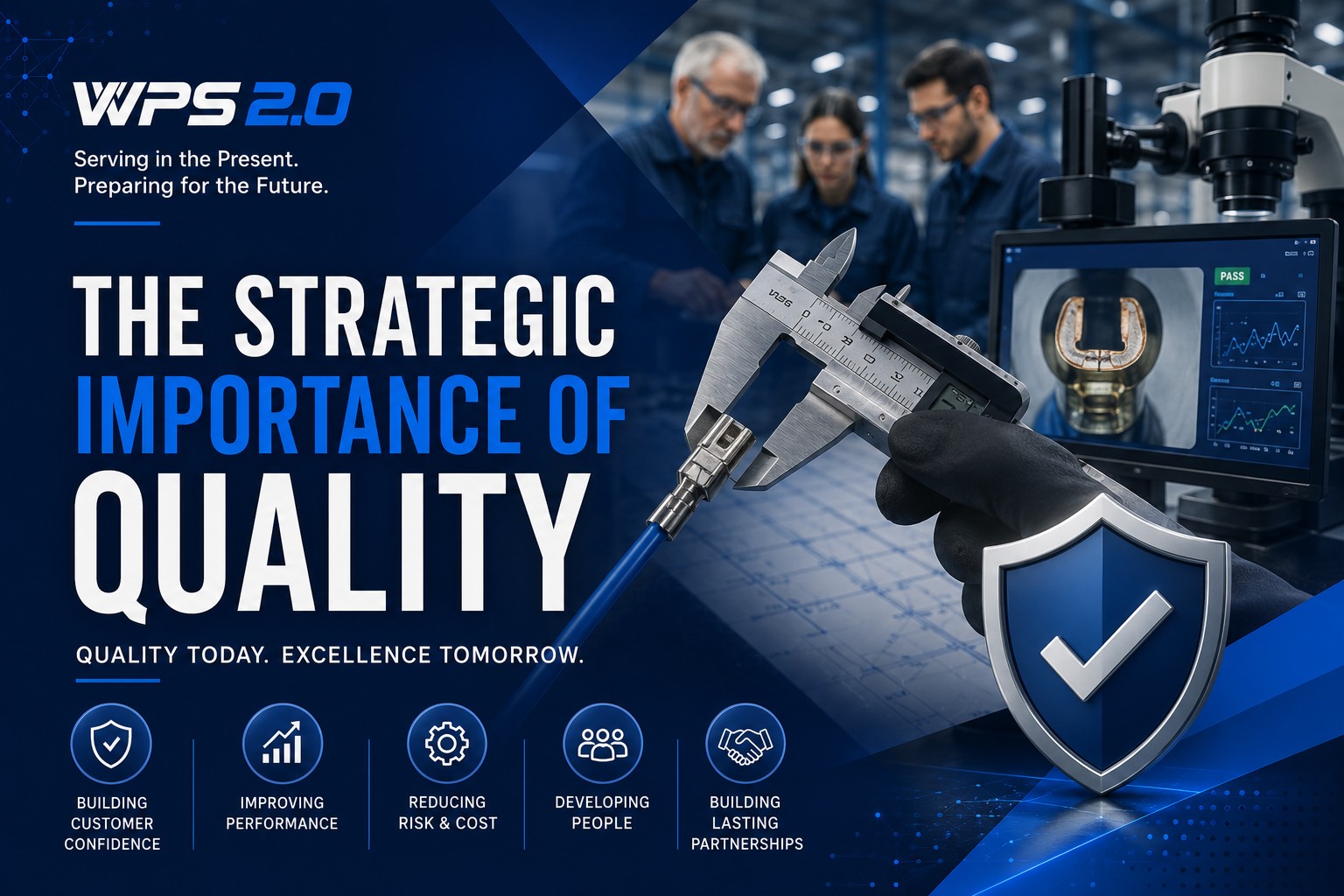
Ask anyone the definition of quality, and you get a range of responses. Like enduring, long-lasting and trouble-free performance. Ask someone in a manufacturing business, and responses include a departmental function, an inspection process, and a stretch goal of achieving perfection. Simply put, most of these definitions are very narrow in scope and personal opinion, based on an individual’s experience. In the case of “achieving perfection,” this is a fundamental misunderstanding of quality. This article expands on quality in an organizational and strategic framework.
To start, quality is not an either/or decision nor is it a luxury (versus a necessity). The rationale of quality being a necessity and a critical part of a company’s culture will be expanded further in this article.
Quality has always been fundamental to manufacturing. Products must meet specifications, processes must remain controlled, and customers must receive what they expect. Yet in an increasingly competitive manufacturing environment, quality needs to be viewed as something more than a technical requirement or the responsibility of a quality department.
Quality is a strategic business issue.
It influences productivity, profitability, customer confidence, employee capability, supplier relationships, and ultimately the reputation of an organization. Companies that approach quality strategically do more than identify defects. They develop people, processes, and systems that prevent problems and continuously improve performance.
For manufacturers looking toward the future, the question is no longer simply, “Does our product meet specification?” A more important question may be, “How does our commitment to quality strengthen our business?” That shift in thinking is essential to a company’s survival in the years to come.
Leadership Determines Quality Culture
Quality culture begins with leadership.
Employees quickly recognize what an organization genuinely values. If production volume consistently takes priority over quality concerns, that message becomes part of the culture. If employees are encouraged to identify problems, improve processes, and develop their skills, a very different culture develops.
Leadership commitment to quality means they acknowledge errors. Most important is how the organization responds when errors occur.
A strong quality culture treats problems as opportunities to learn. Instead of simply correcting the immediate defect, employees investigate why it happened and how recurrence can be prevented. Knowledge gained from one problem then strengthens the entire organization.
Over time, this approach creates an environment where quality is not something imposed by a department. It becomes a shared responsibility.
Quality Requires Skilled People
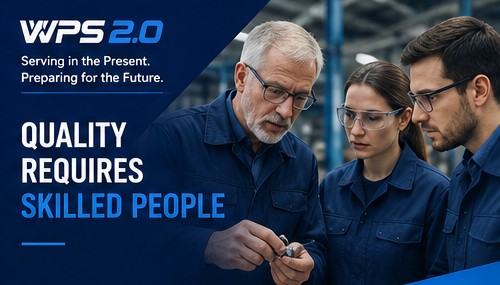
Manufacturing technology continues to advance rapidly. Automation, machine vision, digital measurement, data collection, artificial intelligence, and increasingly sophisticated production equipment can improve consistency and productivity.
Technology, however, does not eliminate the need for knowledgeable people.
Someone must understand the application. Someone must interpret the data. Someone must recognize when a process begins moving outside normal conditions. Someone must determine the root cause of a problem and decide what corrective action should be taken.
This becomes increasingly important as experienced manufacturing professionals retire and organizations face the challenge of transferring knowledge to the next generation.
Training should therefore be considered part of an organization’s quality infrastructure. Teaching employees how to perform a task is important. Teaching them why the process works, what influences the result, and how to recognize problems creates much greater capability.
Equipment provides manufacturers with capacity. Knowledge enables them to use that capacity effectively.
Quality Protects Profit

The relationship between quality and profitability is sometimes underestimated because many costs associated with poor quality are distributed throughout an organization.
Scrap and rework are relatively easy to identify. The larger costs can be much less visible. A quality problem can result in additional inspection, engineering investigations, production interruptions, expedited freight, warranty claims, customer complaints, corrective actions, and management time. In more serious situations, it can contribute to lost customers or reputational damage.
A defect that takes only seconds to produce can therefore create consequences lasting days, months, or even years.
Improving quality reverses this equation. Stable processes produce less scrap and rework. Better-trained employees solve problems more effectively. Appropriate equipment improves consistency. Preventive maintenance reduces unexpected interruptions. Effective process controls allow problems to be identified before they reach the customer.
Quality should therefore not be viewed simply as a cost of doing business. Done well, it becomes an investment in operational efficiency and profitability.
Quality Is More Than Compliance
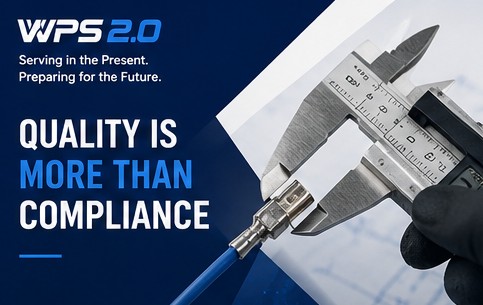
Quality is frequently associated with standards, specifications, inspection procedures, and documentation. These are important components of an effective quality system, but compliance should represent the starting point rather than the final objective.
A product can technically meet a specification while the process producing it remains inefficient or unstable. Similarly, an organization can maintain extensive quality documentation while employees lack the practical knowledge required to recognize emerging problems.
A strategic approach to quality looks beyond compliance. It considers whether processes are capable, whether employees understand why requirements exist, whether equipment is appropriate for the application, and whether lessons learned are being incorporated into future decisions.
Customers Buy Confidence

Industrial purchasing decisions are rarely based on the physical product alone. Customers are also evaluating risk.
Will the product perform as promised? Will deliveries arrive when expected? Will specifications be consistently maintained? Will the supplier respond when assistance is required? What happens when something goes wrong?
These questions ultimately concern confidence.
A supplier that consistently delivers quality reduces uncertainty for its customers. Over time, that reliability builds trust. Customers know what to expect and can make their own production and business decisions with greater confidence.
This is particularly important in manufacturing environments where a relatively inexpensive component or process can affect the reliability of a much more valuable finished product. The purchase price represents only one part of the customer’s decision. The consequences of failure can be considerably greater.
Quality therefore creates value beyond the product itself. It gives customers confidence in the organization behind the product.
Quality Creates Competitive Advantage

Price will always be an important consideration in manufacturing, but competing primarily on price can be difficult to sustain. Another supplier can eventually offer a lower price.
A strong reputation for quality is much harder to duplicate.
Quality develops through the interaction of people, knowledge, processes, equipment, leadership, and organizational culture. Building these capabilities requires time and consistent effort. When quality becomes embedded within an organization, it can become a meaningful source of differentiation.
Customers may initially select a supplier because of price, technology, or availability. They are more likely to develop a long-term relationship when that supplier consistently delivers dependable results and provides knowledgeable support.
For smaller manufacturers and suppliers, this can be particularly powerful. They may not possess the scale of larger competitors, but they can compete through expertise, responsiveness, consistency, and a deeper understanding of customer applications.
Quality becomes part of the value proposition.
Building Quality into the Process
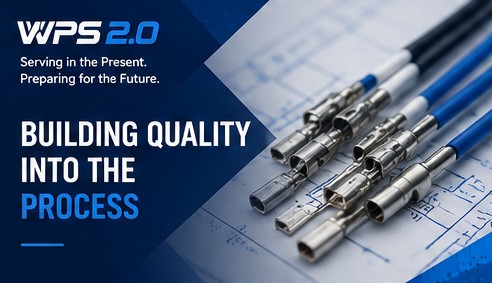
Inspection has an important role in manufacturing, but inspection alone cannot create quality. By the time a defective product reaches final inspection, resources have already been invested in producing it.
The better approach is to build quality into the process.
In wire processing and terminal crimping, for example, the finished connection is influenced by many interconnected factors. Wire specifications, strip length, terminal selection, tooling condition, applicator setup, crimp height, process capability, pull-force testing, operator knowledge, maintenance, and validation practices can all influence the final result.
Looking at only one measurement provides an incomplete picture.
A capable process requires understanding how these variables interact and establishing controls that maintain consistency over time. When manufacturers develop this broader perspective, quality moves upstream. Instead of primarily detecting defects, organizations become better at preventing them.
That transition—from detection to prevention—is one of the most important steps toward manufacturing excellence.
Continuous Improvement Never Ends
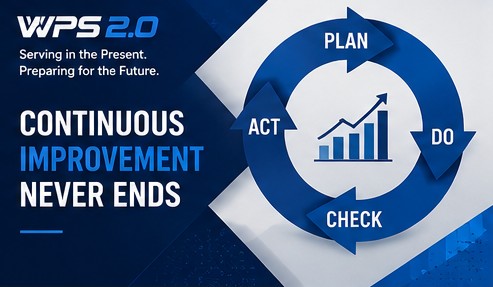
Manufacturing excellence is a journey, not a destination.
Processes that are considered excellent today may be inadequate tomorrow. Customer expectations evolve, technologies improve, competitors introduce new capabilities, and employees identify better ways of working.
Organizations committed to quality therefore develop a habit of asking questions. Where does unnecessary variation exist? What causes recurring problems? Can a process be simplified? Could employees benefit from additional training? Is existing equipment still appropriate? What risks are developing that have not yet created visible problems?
The individual improvements resulting from these questions may appear relatively small. Their cumulative impact can be substantial.
Continuous improvement creates organizations that are more efficient, knowledgeable, adaptable, and prepared for change. More importantly, it prevents complacency from becoming part of the culture.
Quality Builds Long-Term Partnerships

The strongest industrial relationships eventually move beyond individual transactions.
A supplier may initially provide a component or piece of equipment, but long-term value develops when the relationship expands to include knowledge, technical support, training, problem solving, and shared experience.
Quality plays an important role in creating these partnerships because trust is built through repeated performance. Customers remember suppliers who respond when problems occur. They value partners who provide useful advice rather than simply trying to make another sale. They increasingly depend on organizations that understand their processes and contribute to their success.
This represents a different view of the supplier relationship. Instead of asking only, “What can we sell this customer?” organizations can ask, “How can we help this customer become more capable?”
When customers become stronger because of the relationship, both organizations benefit.
Quality as a Long-Term Commitment
Quality is ultimately about more than inspection equipment, measurements, specifications, or documentation. Those tools are essential, but they support something larger.
Quality is about building capable organizations.
It is about developing people who understand their processes. It is about creating systems that prevent problems rather than simply reacting to them. It is about using knowledge and technology together to continually improve performance. And it is about building relationships based on confidence, integrity, and trust.
Organizations that make this commitment strengthen more than the products they manufacture. They strengthen their people, their customers, and their ability to compete.
The manufacturers that succeed in the future will not necessarily be those with the largest factories, the most expensive equipment, or the lowest prices. They will be organizations capable of learning, adapting, improving, and consistently creating value for their customers.
That is why quality should never be viewed simply as a manufacturing requirement.
Quality is a strategic investment in the future of the business.
Serving in the Present. Preparing for the Future.

Manufacturers constantly balance two responsibilities.
They must meet today’s production requirements while simultaneously developing the capabilities they will need tomorrow.
Machines still need to run. Orders need to ship. Customers need support. Problems need to be solved. These immediate responsibilities cannot be ignored.
At the same time, organizations must prepare for workforce transitions, new technologies, increasing automation, changing customer expectations, competitive pressures, and emerging quality requirements.
Quality connects these two priorities.
Improving a process solves today’s problems while creating knowledge for tomorrow. Training an employee strengthens current production while developing future capability. Investing in better measurement or validation reduces immediate risk while establishing a foundation for continuous improvement.
This is the strategic importance of quality.
It allows manufacturers to be Serving in the Present. Preparing for the Future.